
Yuva Shivir — discovering the living warrior arts together
A warrior-arts session at Hindu Parenting’s Yuva Shivir
about 11 min read
गत माह हिंदू पेरेंटिंग के युवा शिविर के लिए हम—उमा जी और मैं—भोर में ही निकल पड़े थे। बेंगलुरु शहर पीछे छूटता जा रहा था और आगे हरियाली से घिरे उपनगर की सुंदर राहें खुल रही थीं। पर मन घड़ी पर टँगा था; पहुँचने में हमें पहले ही विलम्ब हो चुका था।
गाड़ी में एक ही प्रश्न साथ चल रहा था—भारत की युद्ध कलाओं के प्रति बच्चों की रुचि कैसे जगाएँ? क्या कहें कि वे अपनी इस विद्या को जानने के लिए उत्सुक हों?
वहाँ पहुँचकर लगा, इस उत्सुकता को जगाने के लिए अधिक कुछ कहने की आवश्यकता ही नहीं थी। हमने भाषण से नहीं, बातचीत से आरम्भ किया। हमने पूछा—हमारे योद्धा कौन हैं? बच्चों ने महाराणा प्रताप और वेलु नाचियार से लेकर न जाने कितने ही नाम गिना दिए। फिर हमने पूछा—शस्त्र हमारे दर्शन में कहाँ नहीं है? मंदिरों के शिल्पों में, प्रत्येक देव के हाथ में कोई न कोई आयुध है। बात बोधिधर्म तक पहुँची, जो यह विद्या भारत से बाहर ले गए। यह विद्या हमारे घर की है, और इसका विस्तार हमारी सीमाओं से भी आगे गया।
अब तक जो शब्दों में था, उसे हमने उनकी आँखों के सामने रख दिया। बच्चों ने जैसे ही आयुध देखे, वे उन्हें हाथ में लेने, चलाकर देखने और सीखने के लिए उमड़ पड़े। वे अभ्यास के लिए उद्यत थे; हम उन्हें सिखाने के लिए।
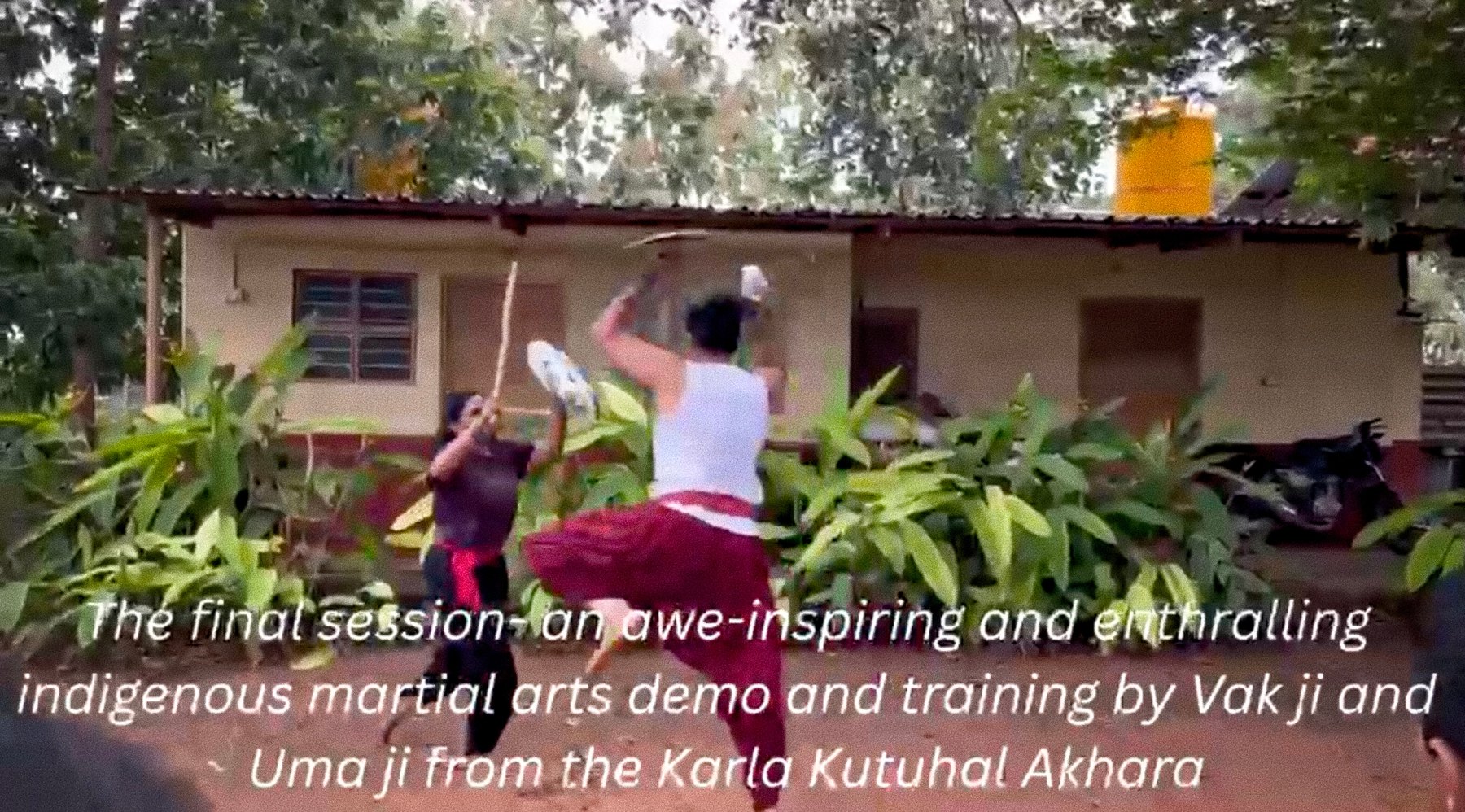
खड्ग-ढाल और पोर-सिलम्बम् के संडै—यानी युद्धाभ्यास—देखते समय उनका विस्मय देखते ही बनता था। उत्सुकता का अंत ही नहीं था।
फिर हमने मेय्पाडम् से अभ्यास आरम्भ किया। देखने में वह सरल लगता है, पर १०८ मंडल करते-करते उसकी कठिनाई का आभास होता है। बिना किसी आयुध के, केवल हाथों-पैरों और पूरे शरीर को साधना भी कितनी बड़ी कला है! थोड़े से अभ्यास में ही थकान आई, और उसी के साथ एक नई समझ भी।
जो सहज दिखाई देता है, उसके पीछे भी इतना परिश्रम है—तो लंबे समय तक युद्धरत रहने वाले योद्धा अपने शरीर, श्वास और मन को किस प्रकार तैयार करते होंगे? यह प्रश्न अब केवल कल्पना नहीं रहा; अभ्यास ने उसे अनुभव का आधार दे दिया। पुरुषार्थ का अर्थ कुछ अधिक स्पष्ट हो गया।
इसके बाद हमने तरईपाडम के कुछ श्रम-अभ्यास किए—दंड और बैठक के अनंत प्रारूपों से भरा, अनेक आसनों को जोड़ता हुआ तरईपाडम, जो हमारी क्षमता को जाँचता भी है और बढ़ाता भी।
फिर बड़े भी अभ्यास में उतर आए
उत्साह केवल बच्चों तक सीमित नहीं रहा। आयोजकों में साठ वर्ष से अधिक आयु के लोग भी थे। उन्होंने देखा, रुचि ली और फिर स्वयं भी साथ अभ्यास करने लगे। बच्चों को सिखाने आए थे; देखते-देखते अलग-अलग पीढ़ियाँ एक ही अभ्यास में जुड़ गईं।
अपनी विद्या से जुड़ने की उत्सुकता किसी एक आयु की सम्पत्ति नहीं है। बच्चों में आयुध पहली बार हाथ में आने का उल्लास था, तो बड़ों में स्वयं करके देखने का उत्साह। सीखने का आनन्द दोनों को एक धरातल पर ले आया, और उस सहभागिता से हमें भी बहुत आनन्द आया।
हर रुचि के लिए एक आयुध
यही मेय्पाडम् की शक्ति है, और भारतीय शस्त्र-विद्या की क्रमिक शिक्षण-पद्धति की भी: वह सबका स्वागत करती है और जहाँ कोई खड़ा है, वहीं से उसे आगे ले चलती है। सरल से आरम्भ होकर वह ऐसी चुनौतियाँ सामने रखती है जिनकी कल्पना भी नहीं की थी, और बिना किसी ज़ोर-ज़बरदस्ती के भीतर से सशक्त बनाती चलती है।
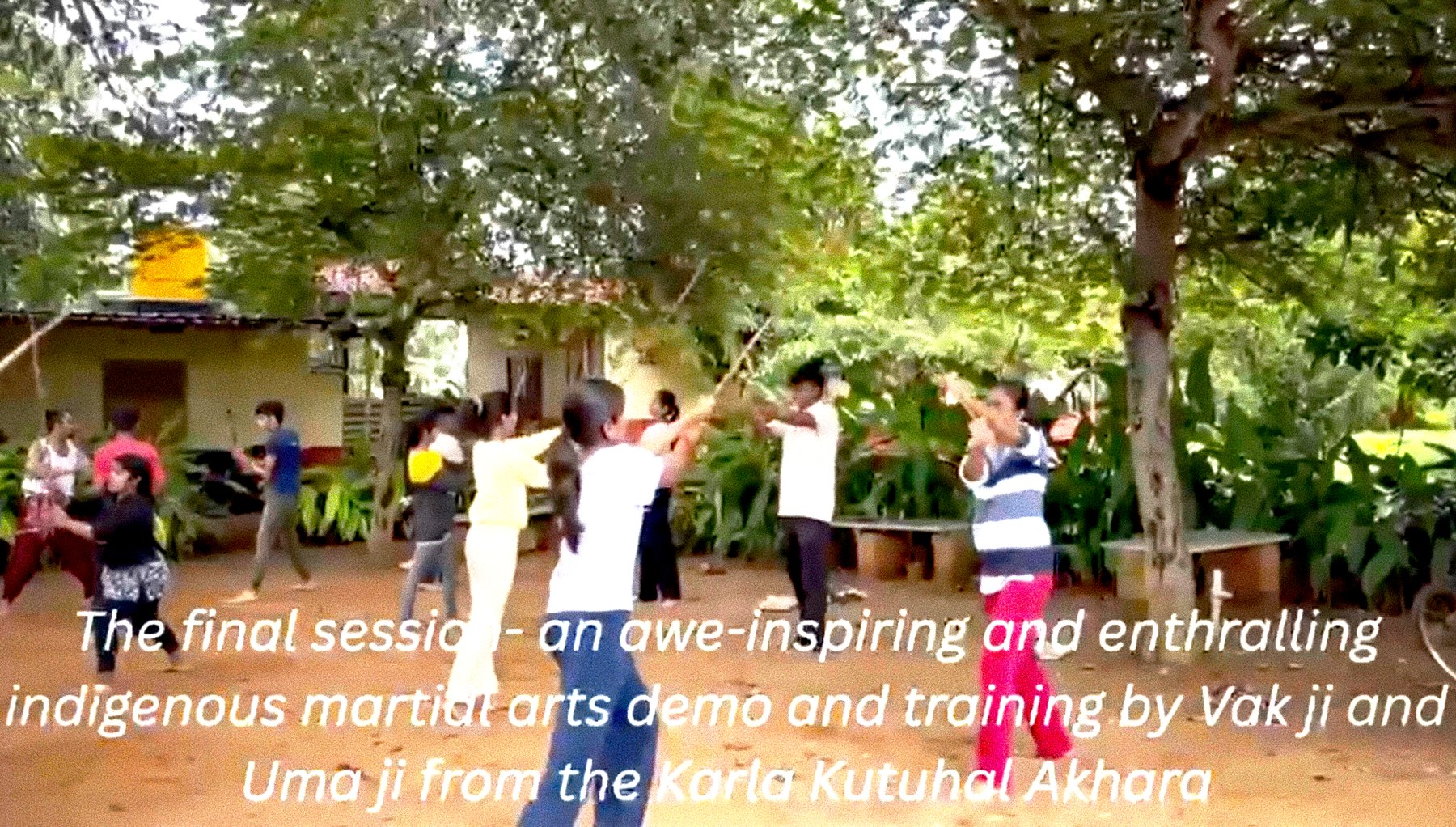
फिर हमने बच्चों के साथ अभ्यास-युद्ध (स्पैरिंग) आरम्भ किया। उसने उनमें एक अलग ही एकाग्रता, ऊर्जा और सजगता जगा दी; वह देखने योग्य थी। बड़ों के लिए भी ऐसे अभ्यास सहायक बताए गए हैं—बढ़ती आयु में स्फूर्ति, संतुलन और समन्वय बनाए रखने में, पार्किन्सन जैसी स्थितियों में, और जीवनशैली-जनित रोगों के विरुद्ध।
हमने रुचि और आयु के अनुसार अलग-अलग आयुध परिचित कराए। कोई गदा में रम गया, कोई खड्ग-ढाल में, कोई लाठी के साथ अपनी पहली चाल सीख रहा था। कुछ और जानना चाहते थे, और प्रश्न पर प्रश्न आते गए—बोधिधर्म के बारे में और जानने से लेकर यह तक कि इसे आगे कैसे सीखते रहें, और क्या हमारे राजा-महाराजा यही सीखते थे?
“आज खड्ग चलाना सीखने का क्या उपयोग है?”
एक छोटी बिटिया ने यह प्रश्न पूछा। आज हम उस प्रकार युद्ध नहीं करते, तो इन कलाओं का हमारे जीवन में क्या स्थान है? प्रश्न छोटा था, पर उसमें पूरी विद्या की फलश्रुति छिपी थी।
उत्तर यही है कि हम केवल लड़ने के लिए इन कलाओं का अभ्यास नहीं करते। शरीर को साधना, कठिन परिस्थिति में मन को स्थिर रखना, अपनी रक्षा का सामर्थ्य विकसित करना और आवश्यकता पड़ने पर किसी निर्बल के लिए खड़े होना—यह सब इसका प्रयोजन है। निर्भयता इस अभ्यास का एक बड़ा वरदान है। वह केवल पढ़ लेने या अपने आप से कह देने से नहीं आती; बार-बार अभ्यास करने से धीरे-धीरे जीवन में उतरती है।
इस विद्या की दिशा स्पष्ट रहनी चाहिए—गौ, ब्राह्मण, वेद, महिलाओं और शिशुओं की रक्षा; समाज की रक्षा; धर्म के लिए खड़े होने का साहस। ब्राह्मण और वेद की रक्षा में ज्ञान, अध्ययन और परम्परा के संरक्षण का दायित्व भी निहित है। यह बल दूसरों को दबाने के लिए नहीं, अपने दायित्व से पीछे न हटने के लिए है।
इसीलिए बल का संस्कार विनय और संयम के साथ होता है। भगवद्गीता दैवी गुणों में तेज के साथ क्षमा, धैर्य और अभिमान के अभाव को रखती है:
तेजः क्षमा धृतिः शौचमद्रोहो नातिमानिता। भवन्ति सम्पदं दैवीमभिजातस्य भारत॥
—
पराक्रम और विनय साथ विकसित हों—सामर्थ्य का उद्देश्य अहंकार का पोषण नहीं, रक्षा का दायित्व निभाना है। निर्भीकता के साथ विवेक भी चाहिए: कब बोलना है, कब सहायता जुटानी है और कब किसी की रक्षा के लिए तत्काल आगे आना है। यह निर्णयशक्ति भी साधना माँगती है।
अपनी विद्या को पहचानना
बच्चों ने कराटे और अन्य कलाओं के विषय में भी पूछा। वे जानना चाहते थे कि भारत की इन विद्याओं का विस्तार कितना है और विभिन्न प्रदेशों में इनके कौन-कौन से रूप हैं। हमने सिलम्बम् की शैलियों, उसकी परम्परा और आयुधों के पीछे की गति एवं साधना पर चर्चा की।
सीता माता और द्रौपदी के प्रसंगों को याद करते हुए हमने संकट के बीच धर्म पर दृढ़ रहने की बात की। बच्चों के लिए हमारा आग्रह था: शरीर के साथ मन भी बलशाली बने। अपने जीवन में ऐसा अभ्यास रखें जो साहस, अनुशासन और सजगता को पोषित करे।
जो हमने एक दिन में दिखाया, वह एक द्वार था; उसके आगे दीर्घ अभ्यास, अध्ययन और गुरु से सीखने का मार्ग है। सिलम्बम् पर हमारा विस्तृत लेख इसी जीवित परम्परा का परिचय देता है।
विदाई के समय भी उत्सुकता बनी रही
अंत में कई बच्चे हमें कार तक छोड़ने आए। सीखने और पूछने की उनकी उत्सुकता तब भी कम नहीं हुई थी। हमने उन्हें लाठियाँ दीं। उन्होंने प्रसन्न होकर कहा कि वे सीखेंगे, अभ्यास करेंगे और आगे सिखाएँगे भी।
एक दिन में उन्होंने कितना सीखा, उससे अधिक महत्त्वपूर्ण था कि एक दिशा खुली। हमारी आशा है कि यह अनुभव उनकी स्मृति में एक रोचक अध्याय बनकर रहेगा और अवसर मिलने पर वे अपनी भारतीय कलाओं में और गहराई खोजेंगे।
हिंदू पेरेंटिंग का आभार
ऐसा मिलन अपने आप नहीं हो जाता। उसके पीछे उन लोगों का श्रम होता है जो बच्चों को एकत्र करते हैं, परिवारों को जोड़ते हैं और अपनी परम्पराओं से मिलने के अवसर बनाते हैं। हिंदू पेरेंटिंग जैसे समूह इस दिशा में बहुत मूल्यवान काम कर रहे हैं। इस शिविर ने केवल एक प्रदर्शन देखने का अवसर नहीं दिया; उसने प्रश्न पूछने, हाथ में आयुध लेने और स्वयं अभ्यास करने की जगह बनाई।
आयोजकों का हृदय से आभार—और उन बच्चों तथा बड़ों का भी, जिन्होंने साथ अभ्यास करके उस दिन को इतना आनन्दपूर्ण बनाया। बच्चों का कार तक साथ आना, बड़ों का अभ्यास में उतरना और सीखने-सिखाने का संकल्प: यही उस शिविर की सबसे प्रिय स्मृतियाँ हैं।
आइए, अपनी कला को जानें, जिएँ और आगे पहुँचाएँ
हमारे मंदिरों के शिल्पों में देवताओं के हाथों में आयुध हैं। हमारे इतिहास और कथाओं में श्रीराम और हनुमान, अर्जुन, महाराणा प्रताप, छत्रपति शिवाजी महाराज, रानी दुर्गावती और ताराबाई का पराक्रम है। उनकी धैर्यशक्ति, साधना और धर्मनिष्ठा केवल उत्सव की झाँकी न रह जाए; वह हमारे उठने, चलने, सोचने और कर्म करने में उतरे।
इसका आरम्भ घर से होता है। अपनी संतानों को केवल वीरों की कथाएँ ही न सुनाएँ—उन्हें उस पुरुषार्थ का स्वाद भी चखाएँ, और स्वयं भी अभ्यासभूमि में उतरें। प्रतिदिन समय निकालें, गुरु से सीखें, शरीर को साधें, अपनी विद्या का अध्ययन करें। अपने देवताओं, ज्ञान-परम्पराओं, भाषाओं, वेशभूषा और गौ के प्रति गौरव से खड़े हों; निंदा का उत्तर ज्ञान और दृढ़ वाणी से दें। उत्साह को एक दिन की स्मृति बनाकर न छोड़ें—उसे अभ्यास का संकल्प बनाएँ।
युवा शिविर में बच्चों की आँखों में जो उत्कण्ठा हमने देखी, वह इसी जागरण का बीज है। उसे अपने घरों में, अपने समाज में और अगली पीढ़ी के जीवन में सींचना अब हमारा काम है। आइए, अपनी कला को जानें, जिएँ और आगे पहुँचाएँ।
नियमित अभ्यास के लिए हमारे अभिमन्यु कार्यक्रम को देखें।
<!-- /language --> <!-- language:en -->Last month, Uma ji and I set out for Hindu Parenting’s Yuva Shivir at first light. Bengaluru fell away behind us and the road opened onto green, scenic outskirts. But our minds were on the clock; we were already running late.
One question rode along in the car: how do we kindle the children’s interest in Bharat’s warrior arts? What could we say that would make them curious about this inheritance?
When we arrived, we found that very little needed saying. We began with conversation, not a speech. We asked: who are our warriors? The children named Maharana Pratap and Velu Nachiyar, and then more names than we could keep up with. We asked: where is the shastra not found in our darshan? In temple sculpture, every deva carries an ayudh in hand. The talk reached Bodhidharma, who carried this vidya beyond Bharat. This vidya is ours, and its reach went farther than our own borders.
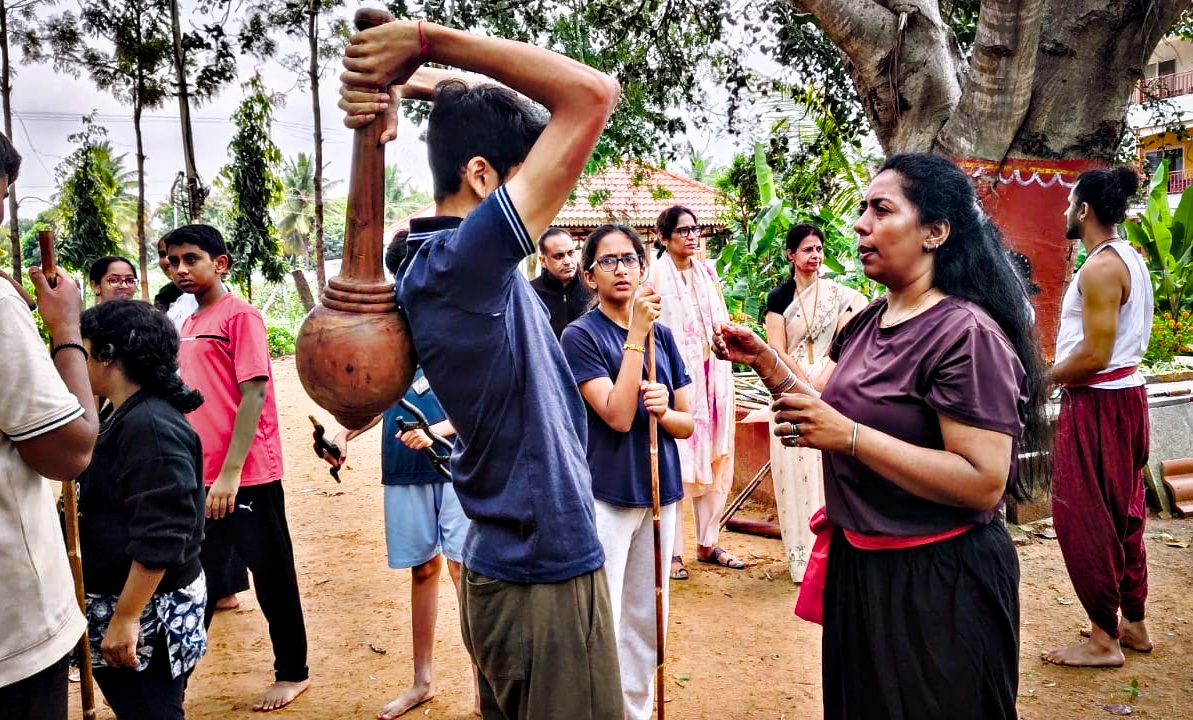
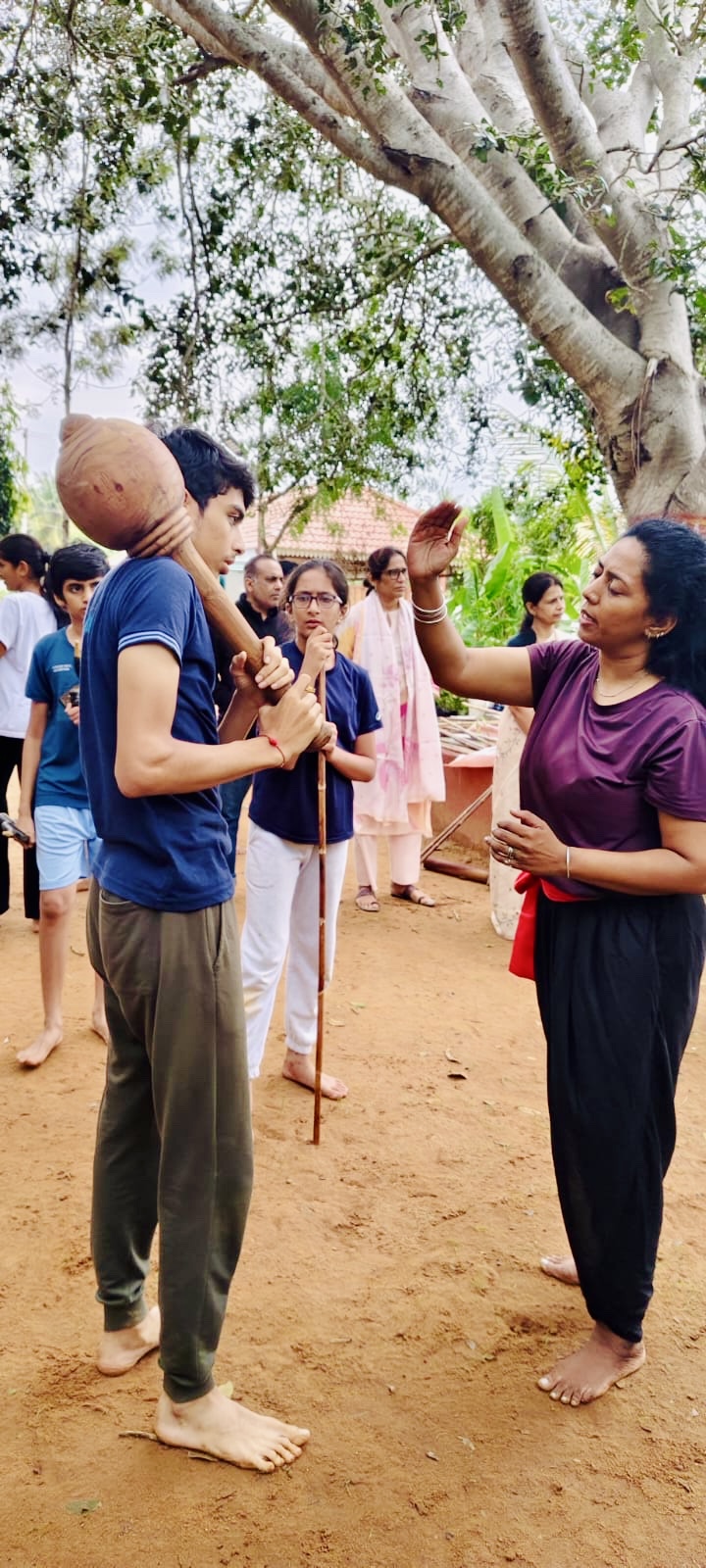
What had been only words until then, we placed before their eyes. The moment the children saw the ayudhs, they surged forward to hold them, try them and learn. They were ready to practise; we were ready to teach.
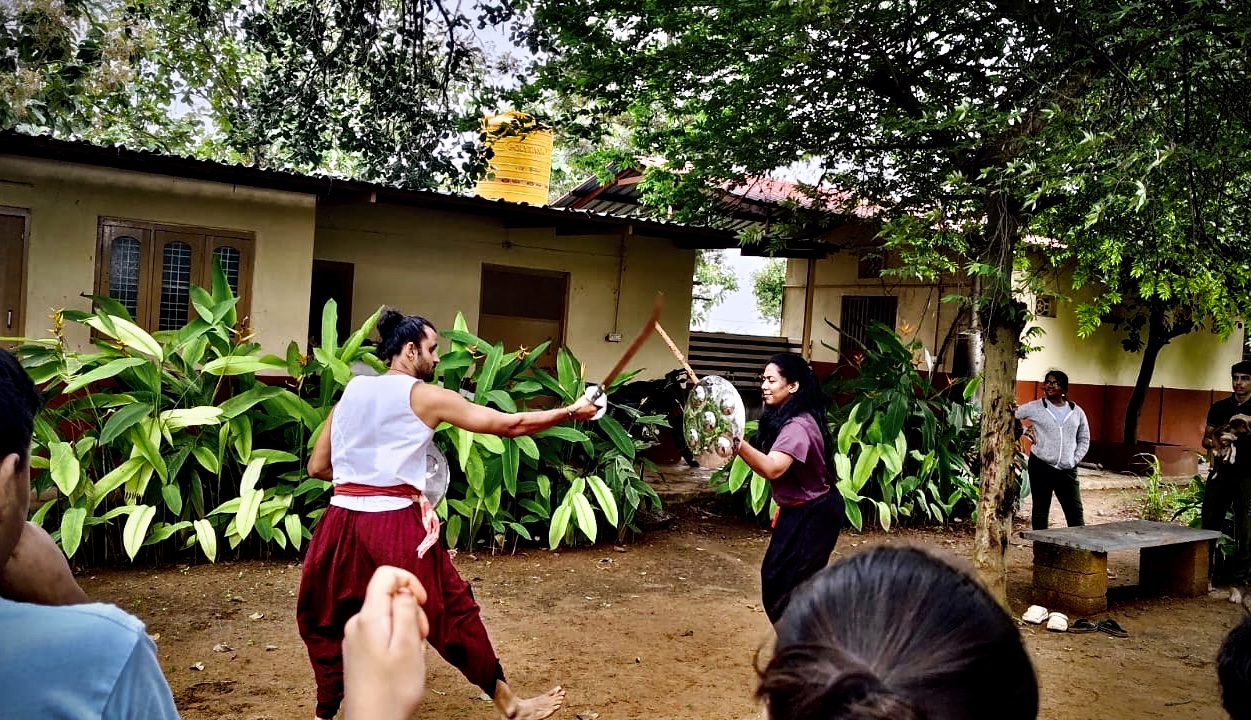
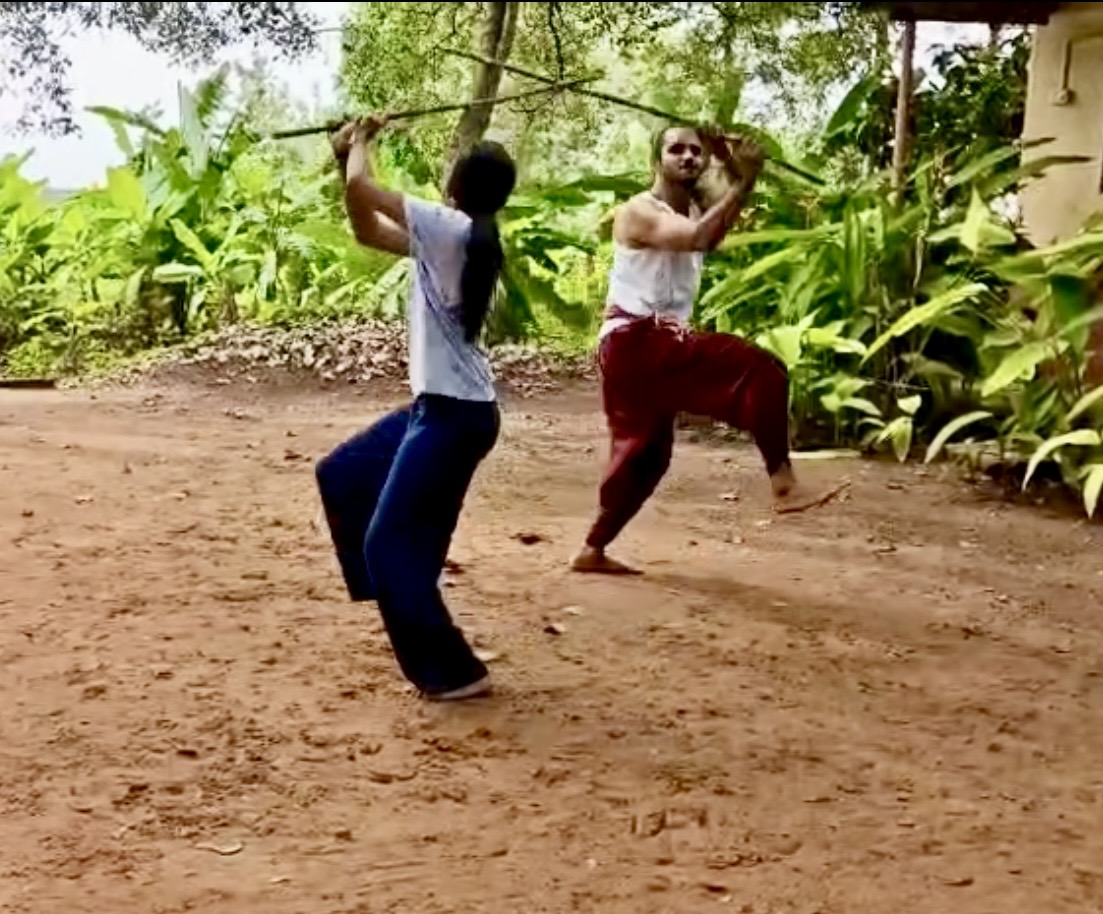
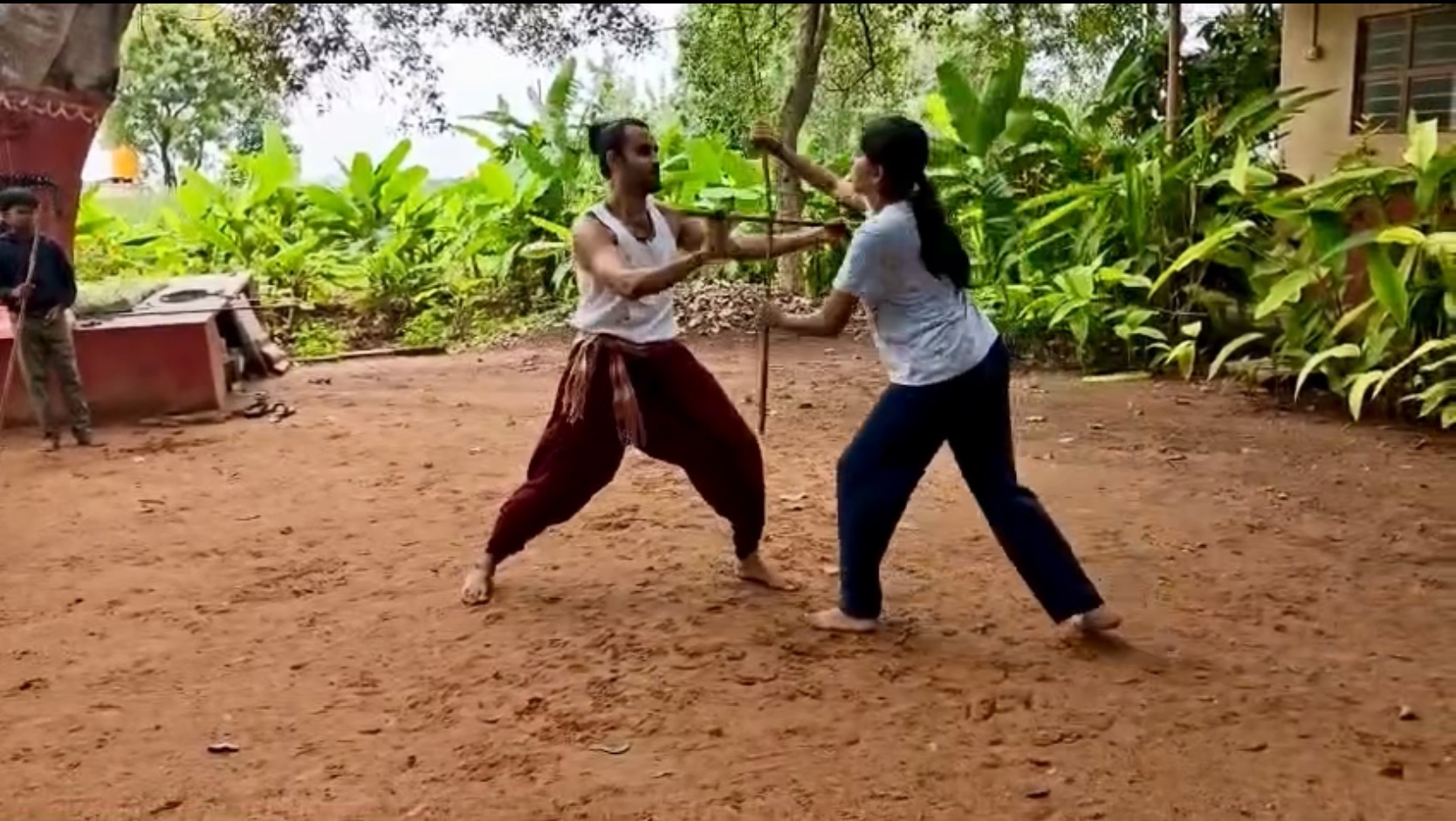
Their wonder during the sword-and-shield and Por Silambam sandai demonstrations was a joy to see. The curiosity never ran out.
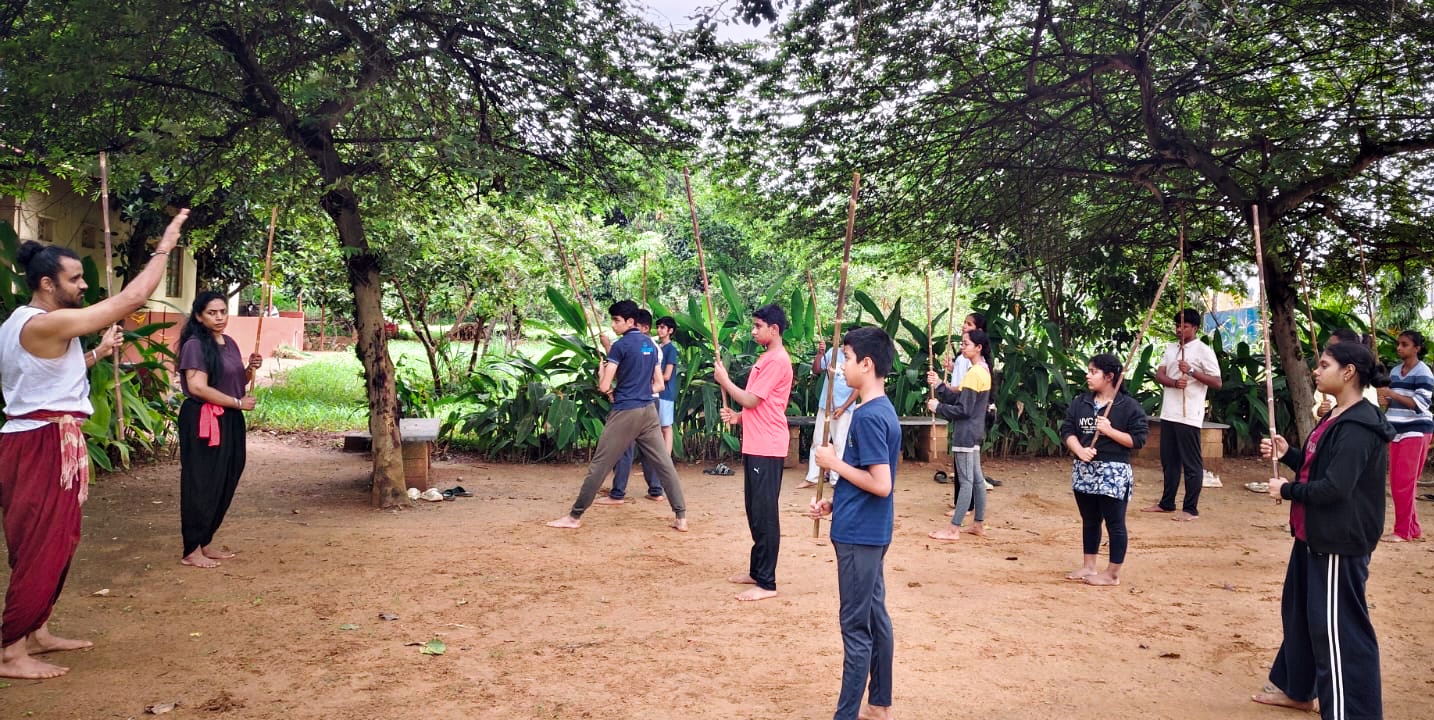
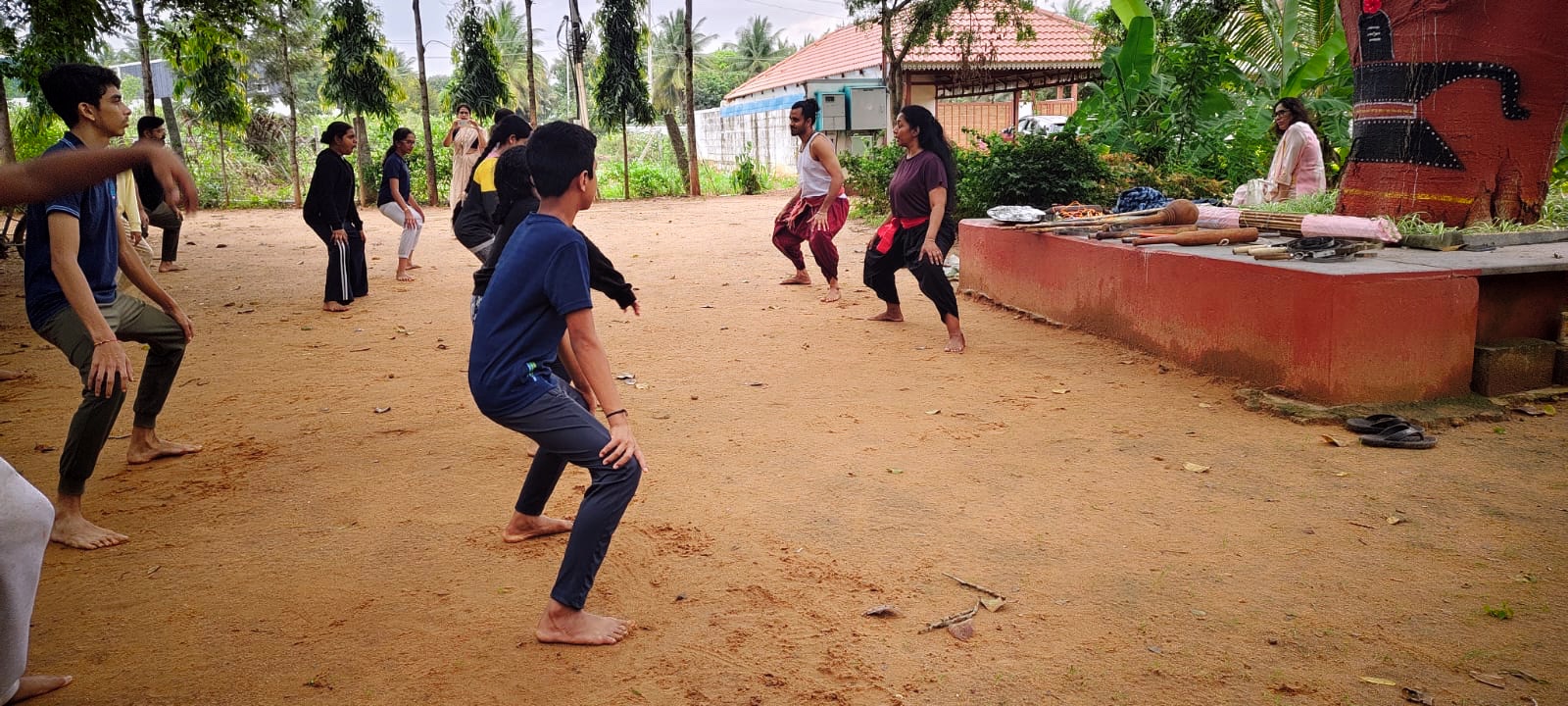
Then we began the practice with MeiPadam. It looks simple, but somewhere in the course of 108 mandals its difficulty announces itself. Even without an ayudh, coordinating the hands, feet and whole body is a great art. A short stretch of practice brought fatigue—and with it, a new understanding.
If what looks effortless takes this much effort, how must warriors who fought for long hours have prepared body, breath and mind? The question was no longer imagination; practice had given it a footing in experience. The meaning of purushartha—dedicated effort—became a little clearer.
After that we did a few rounds of taraipadam conditioning: an endless variety of dands and baithaks, strung together with many asanas, which tests our capacity and builds it too.
Then the elders joined in
The enthusiasm belonged to more than the children. Among the organisers were people over sixty. They watched, took an interest and then began to practise with us. We had come to teach the children; before long, different generations were learning side by side.
The wish to reconnect with our own vidya belongs to no single age. The children had the delight of holding an ayudh for the first time; the elders had the eagerness to try it themselves. The joy of learning brought them onto common ground, and it brought us great joy too.
An ayudh for every interest
That is the power of MeiPadam, and of the gradual pedagogy of Bharatiya shastra vidya: it welcomes everyone and carries each person forward from wherever they stand. It begins simply, then presents challenges no one had thought of, and makes you stronger from within without any forcing.
Then we began sparring with the children. It woke a different focus in them, and a new energy and alertness; it was something to see. For elders too, such practice has been described as helpful: keeping vigour, balance and coordination as the years advance, in conditions such as Parkinson’s, and against lifestyle diseases.
We introduced different ayudhs according to interest and age. One child settled into the gada, another into sword and shield, another was learning a first movement with the staff. Some wanted to know more, and the questions kept coming—from Bodhidharma, to how they could keep learning, to whether this was what our kings once learnt.
“What is the use of learning the sword today?”
A young girl asked this. We do not fight in the same way today, so what place do these arts have in our lives? The question was small, but it held the whole purpose of the vidya.
The answer is that we do not practise only to fight. Training the body, keeping the mind steady under pressure, building the capacity to protect oneself and standing beside someone weaker when needed—all of this is part of it. Fearlessness is one of the great gifts of practice. It does not come from reading about it or telling oneself so; it settles into life through repetition.
The direction of this vidya must stay clear: protecting cows, Brahmins, the Vedas, women and children; protecting society; and having the courage to stand for dharma. Protecting Brahmins and the Vedas also carries the responsibility to preserve learning, study and tradition. This strength is not for pressing down on others, but for never stepping back from duty.
That is why strength is always paired with humility and restraint. The Bhagavad Gita places vigour alongside forgiveness, fortitude and freedom from conceit among the divine qualities:
तेजः क्षमा धृतिः शौचमद्रोहो नातिमानिता। भवन्ति सम्पदं दैवीमभिजातस्य भारत॥
—
Courage and humility must grow together; capability exists to carry the duty of protection, not to feed pride. Fearlessness also needs discernment: knowing when to speak, when to seek help and when someone needs us to step forward at once. That judgement, too, is cultivated through practice.
Recognising our own inheritance
The children also asked about karate and other arts. They were curious about the reach of these traditions and the forms practised in different regions. We spoke about Silambam’s styles, its living lineage and the movement and discipline behind its ayudhs.
Recalling Sita and Draupadi, we spoke about holding firm to dharma amid difficulty. Our invitation to the children was to grow strong in mind as well as body, and to keep a practice that nourishes courage, discipline and awareness.
What we showed in a single day was a doorway; beyond it lie long practice, study and learning from a teacher. Our extended discussion of Silambam introduces that living tradition.
The curiosity continued as we left
Several children accompanied us to the car, still eager to ask and learn. We gave them staffs. They told us happily that they would keep practising, learn, and one day teach others.
What mattered more than how much they learnt in a day was that a direction had opened. We hope the day stays with them as a memorable chapter, and that they will seek greater depth in Bharat’s arts whenever the opportunity comes.
Our thanks to Hindu Parenting
A gathering like this does not happen by itself. Someone brings the children together, connects families and creates the opportunity to meet our traditions. Groups such as Hindu Parenting are doing valuable work. This shivir gave more than a demonstration to watch; it made room to ask questions, hold an ayudh and practise.
Our heartfelt thanks to the organisers, and to the children and elders whose participation made the day so joyful. The children walking us to the car, the elders joining the practice and the resolve to keep learning and teaching: these are the memories we treasure most.
Come, let us know our art, live it and carry it forward
Our temple sculptures place ayudhs in the hands of our deities. Our histories and narratives remember Shri Rama and Hanuman, Arjuna, Maharana Pratap, Chhatrapati Shivaji Maharaj, Rani Durgavati and Tarabai. May their resolve, discipline and devotion to dharma be more than a pageant for festival days; may it enter how we stand, think, decide and act.
It begins at home. Do not only tell your children the stories of heroes—let them taste the effort behind courage, and enter the practice ground yourselves. Make time each day, learn from a teacher, train the body and study the vidya. Stand with pride in our deities, knowledge traditions, languages, dress and reverence for the cow; meet disparagement with knowledge and a firm voice. Do not leave the enthusiasm of a single gathering as a one-day memory—make it a commitment to practice.
The eagerness we saw in the children at Yuva Shivir is the seed of that awakening. Nurturing it—in our homes, our communities and the next generation—is now our work. Come: know the art, live it and carry it forward.
For regular training, explore our Abhimanyu programme.
<!-- /language -->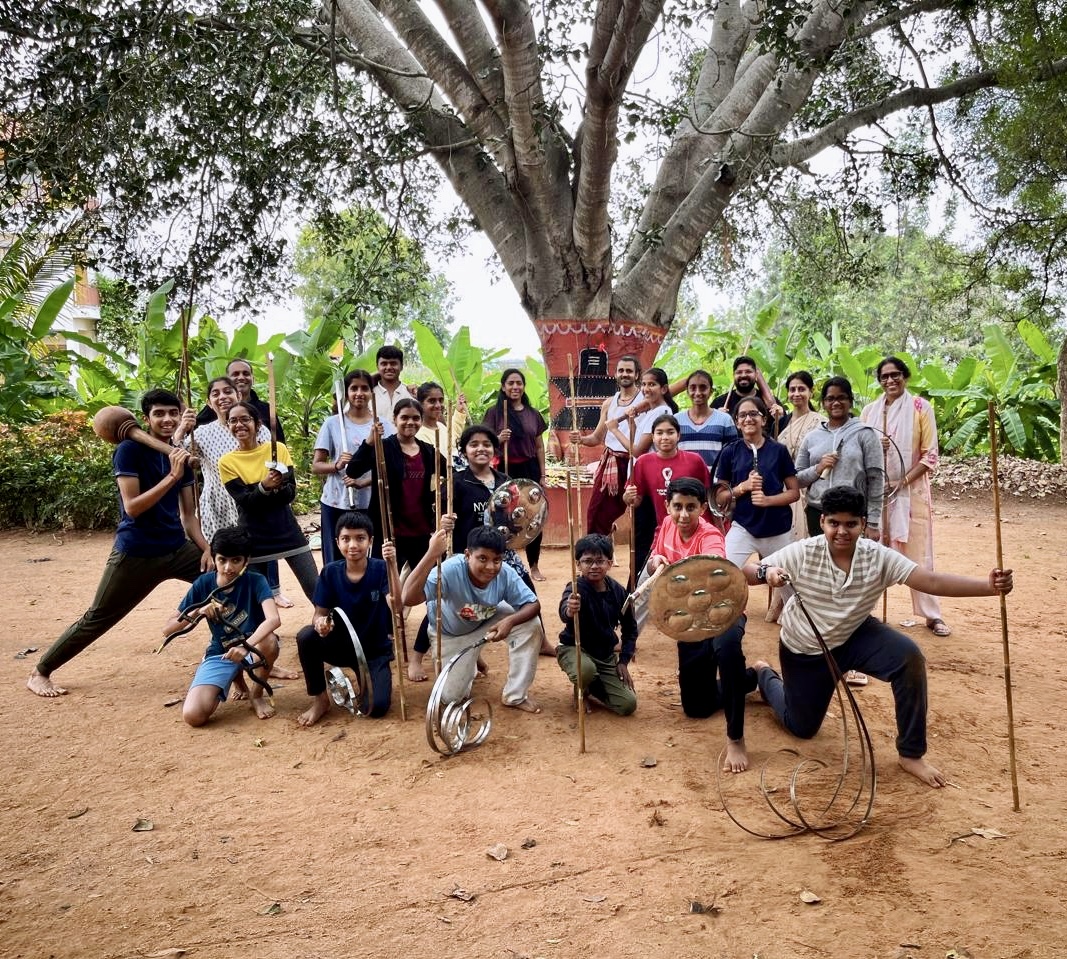
Continue
Read this next
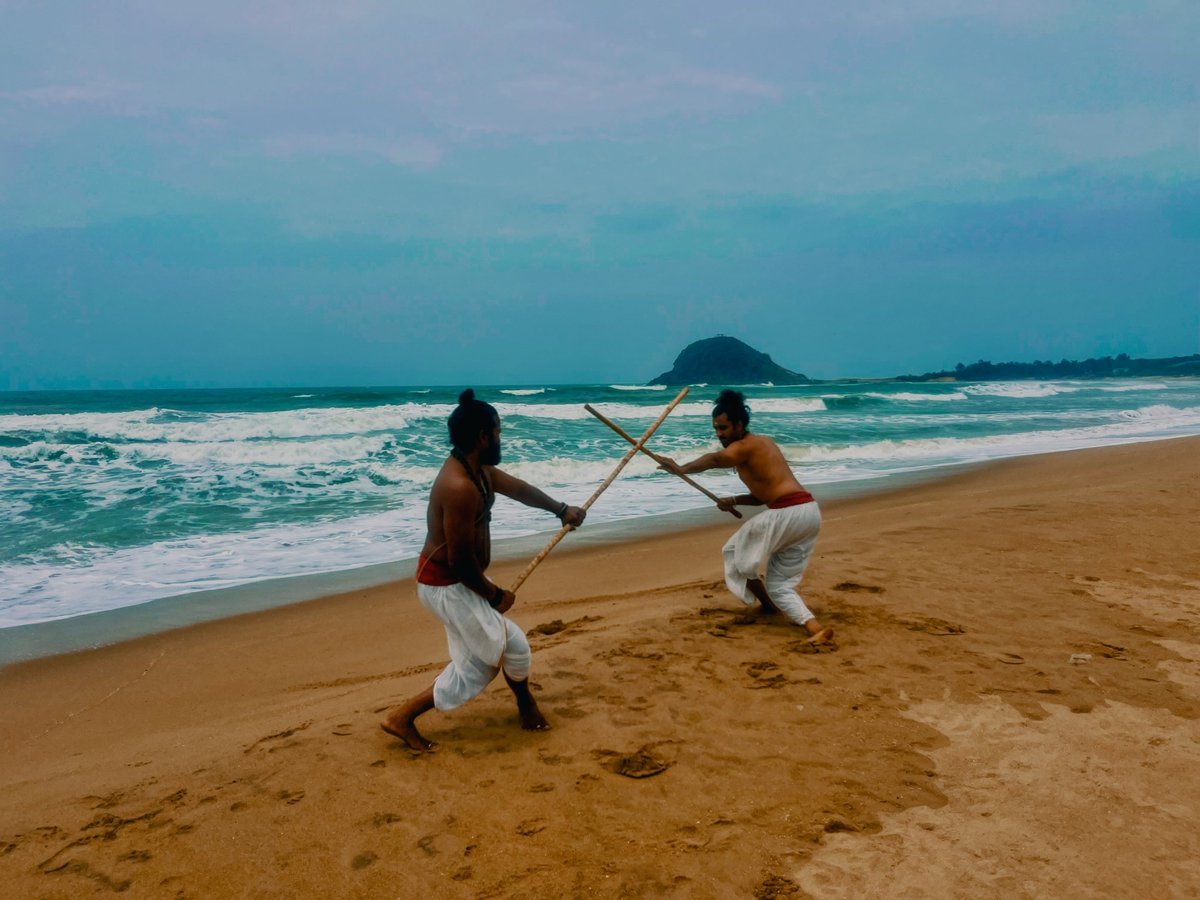
Silambam — the Murugan-Agastya Dhanurved
On the Warrior art of the Chola, Pandya and Pallava RajVansh
Read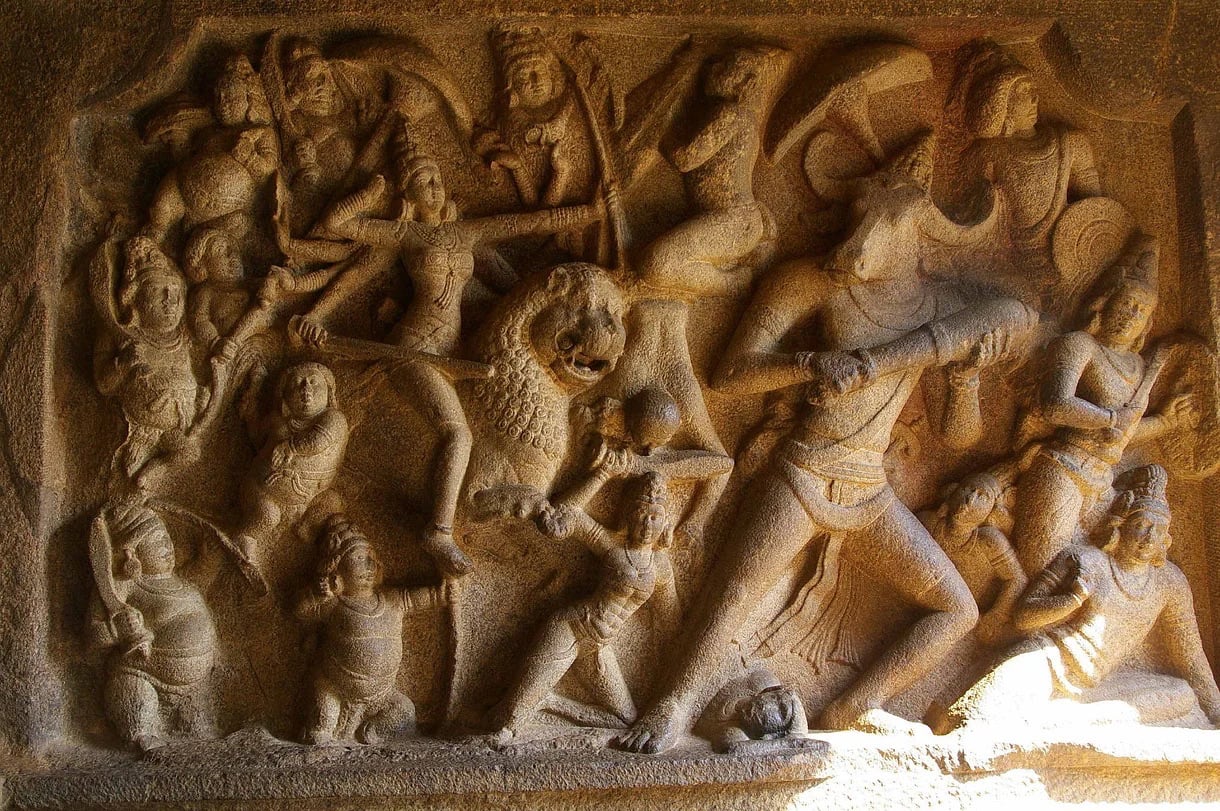
Podi-Kuchi, an essential in Bhartiye Fitness
Podi-Kuchi, an essential in Bhartiye Fitness
Read
The Famous Five & the Idumban Karlakattai
The Famous Five & the Idumban Karlakattai
ReadComments
Commenting as a guest. Log in to reply, react to comments and keep your name.
No comments yet. Be the first to share your thoughts!


All rights reserved © Karla Kutuhal Akhara by Vagambhrini 2021-2026
UDYAM ID: UDYAM-UK-07-0005613 | MSME Registered under 8541 - Sports Education



'%3e%3cpath%20id='path7'%20fill='%23282828'%20fill-opacity='1'%20d='M118.9%2013.3c-1.4-5.2-5.5-9.3-10.7-10.7C98.7%200%2060.7%200%2060.7%200s-38%200-47.5%202.5C8.1%203.9%203.9%208.1%202.5%2013.3%200%2022.8%200%2042.5%200%2042.5s0%2019.8%202.5%2029.2C3.9%2076.9%208%2081%2013.2%2082.4%2022.8%2085%2060.7%2085%2060.7%2085s38%200%2047.5-2.5c5.2-1.4%209.3-5.5%2010.7-10.7%202.5-9.5%202.5-29.2%202.5-29.2s.1-19.8-2.5-29.3z'/%3e%3cpath%20id='polygon9'%20fill='%23fff'%20d='M80.2%2042.5%2048.6%2024.3v36.4z'/%3e%3c/g%3e%3c/svg%3e)