
श्रमेण प्राप्यते जयः — Why We Repeat
The four stages of Dhanurveda already alive in our morning practice
about 4 min read
श्रमेण प्राप्यते जयः — Why We Repeat
The four stages of Dhanurveda already alive in our morning practice
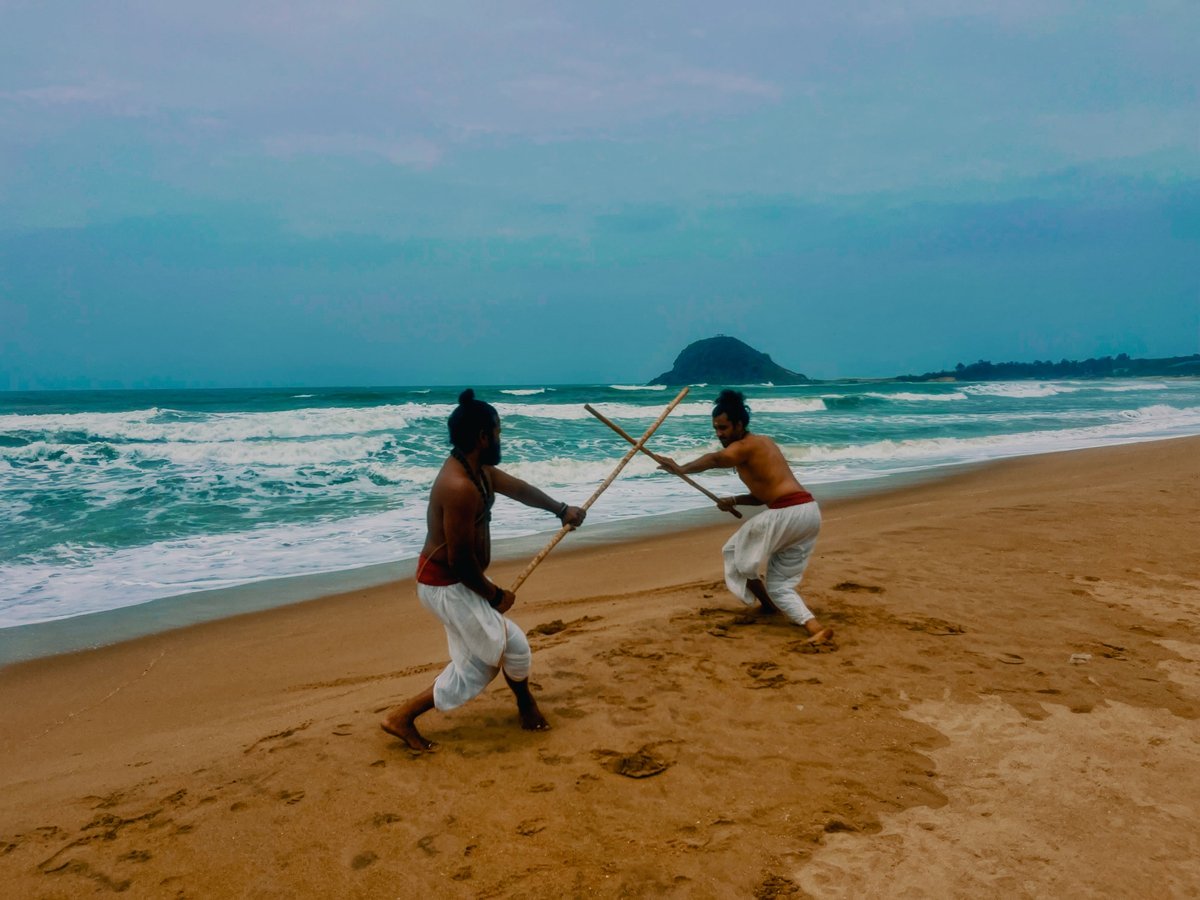
Some mornings in the akhara begin with a movement so simple that it seems almost too small to deserve attention. One turn of the shoulder. One placement of the foot. One kambu rotation, repeated until the count disappears and only the movement remains.
At first, repetition looks like sameness. By the hundredth count no two turns are quite the same: the weight settles differently, the breath arrives earlier, an unnecessary tension gives way, the eye becomes quiet. The lesson has not changed; the shishya has. What seemed too small to contain knowledge begins to reveal a depth that novelty had hidden.
Vasiṣṭha Dhanurveda places that morning inside the complete journey of vidyā:
तत्र चतुष्टयपादात्मको धनुर्वेदः । यस्य प्रथमे पादे दीक्षाप्रकारः । द्वितीये संग्रहः तृतीये सिद्धप्रयोगाः चतुर्थे प्रयोगविधयः ॥ २ ॥
— वसिष्ठ धनुर्वेद संहिता १.२
In dīkṣā, the shishya first learns to see. He watches the guru’s feet, shoulders, breath, rhythm and dṛṣṭi, and lets his own body follow. The movement is not broken into words all at once. One outward shape carries relations among foot, hip, shoulder, eye and breath that a hundred instructions would separate. The vidyā already stored in the guru’s body through thousands of repetitions begins to enter the shishya’s body through darśana, śraddhā and repetition.
That is how a young student enters MeiPadam. The shoulder turns while the hip remains quiet. The foot finds its place. The breath stops chasing the movement and begins to carry it. What looked like imitation becomes the first act of transmission. The shishya can receive before he can explain, and years later the explanation may only give a name to what the body has long known.
The distinction becomes clear when we see the sūkṣma śarīra at work. Manas receives the impressions, buddhi recognises and explains them, chitta stores them as saṃskāra, and ahaṅkāra gradually says, “this is how I move.” A teaching that reaches only buddhi can make us understand a movement; a śikṣā-praṇālī that reaches chitta and ahaṅkāra makes it a natural vṛtti—an action that rises before deliberation, and eventually part of who we are. This is why the guru’s presence, dṛṣṭi, breath and repeated form reach deeper than instruction alone.
This is a familiar order throughout Bharatiya vidyā-praṇālī. A mantra received in dīkṣā may contain only a few syllables. At first the tongue repeats their sound; through japa, breath joins sound, chitta gathers around it, artha and bhāva deepen, and what was uttered from the beginning begins to be known from within. The mantra did not become greater by acquiring something foreign. The shishya became capable of entering more of what had already been given.
MeiPadam follows the same movement of transmission in the body. The simple turn is received whole, gathered through repetition, made steady in siddhaprayoga, and opened in prayogavidhi as block, strike, transition, restraint and countless other living relations. Its first appearance is simple because dīkṣā gives a doorway, not because the vidyā behind that doorway is small.
Mallapurāṇa gives this repeated work its measure:
उत्साहवृद्धिरप्यस्य जायतेऽल्पश्रमेण तु । तस्मादल्पश्रमो नित्यं कर्तव्यः सुखमिच्छता ॥ ३३ ॥ अथाल्पश्रमसंभूतं लक्षणं कथयाम्यहम् । अल्पश्रमे कृते प्रातः श्वासः स्वेदो न जायते ॥ ३४ ॥
— मल्लपुराण ९.३३–३४
Alpa-śrama is to be done daily. Its sign is that the morning practice does not leave one gasping or sweating, nor force the body past its measure. This is an exact answer to burnout: not the absence of śrama, but śrama held to a measure that can be restored from and repeated tomorrow. The chapter names its fruits as bala, agni, lightness, release from stiffness, steadiness of the limbs and growing utsāha. MeiPadam remains within that restorative measure while one simple movement turns through a high count on rhythmic breath. The labour accumulates; strain does not have to. Each morning asks for less than exhaustion and, precisely because it can be offered again tomorrow, can claim more of a lifetime. Lightness here is not the opposite of depth; it is how depth becomes sustainable.
Mallapurāṇa lists sixteen śramas, recognising that the body is prepared through distinct yet related modes. Bhramaṇikā gives ordered movement through changing paths; Śvāsa-preraṇikābhyāsa joins exertion to breath; Āsthādanaka brings the body down into the ground-work of TaraiPadam and Dadal—lowering, rising and ukki; and Kuṇḍakāvartana develops the circular relation of jaṅghā, kaṭi, prāṇa and hṛdaya. MeiPadam gathers these relations into one light, rhythmic and repeatedly traversed body-lesson.
चतुर्विधं भवेत्प्राणं कुण्डकावर्तनश्रमात् ॥ ३४ ॥
— मल्लपुराण ११.३४
What lies beyond MeiPadam is not a new movement language. As saṅgraha becomes siddhaprayoga, the same grammar that was seated through simple repetition begins to appear in Kuthu-Varisai, Ondi-Padam, Kaal-Padam, Karlakattai, Silambam and every other āyudha. The sequence, implement, distance and danger change; the body does not begin again. A shoulder turn can become a block, a marma-path, a transition, a Jodi entry or a difficult Mallakhamb movement because MeiPadam has already given the common relation. It is not left behind when the next discipline begins—it is what lets the next discipline become intelligible in the body.
The first chapter travels through one hundred verses before resting upon the source of that entire progression:
श्रमेण चित्रयोधित्वं श्रमेण प्राप्यते जयः । तस्माद् गुरुसमक्षं हि श्रमः कार्यो विजानता ॥ १०० ॥
— वसिष्ठ धनुर्वेद संहिता १.१००
Morning after morning, śrama in the presence of the guru makes the extraordinary yodha and brings victory. Kambu or Karlakattai, MeiPadam or Kuthu-Varisai, a fixed target or a moving partner—the āyudha changes, but this foundation does not.
योगः कर्मसु कौशलम् ।
— श्रीमद्भगवद्गीता २.५०
Supplementary modern readings
These papers are retained as modern parallels to particular observations above—not as the source or measure of the vidyā:
- L. Moerch et al. (2013),
, European Journal of Applied Physiology 113(2):449–455 — mechanical loading and the collagen response of tendon tissue. 2. D. Chatzopoulos et al. (2014),
, Journal of Sports Science & Medicine 13(2):403–409 — dynamic mobility, balance and agility. 3. L. A. Teixeira, M. V. M. Silva and M. Carvalho (2003),
, Laterality 8(1):53–65 — repeated practice of the non-dominant side and established movement asymmetry. 4. E. De Stefani et al. (2020),
, PLOS ONE 15(8):e0237697 — learning unfamiliar movement through expert observation and imitation.
Continue
Read this next
Silambam — the Murugan-Agastya Dhanurved
On the Warrior art of the Chola, Pandya and Pallava RajVansh
Read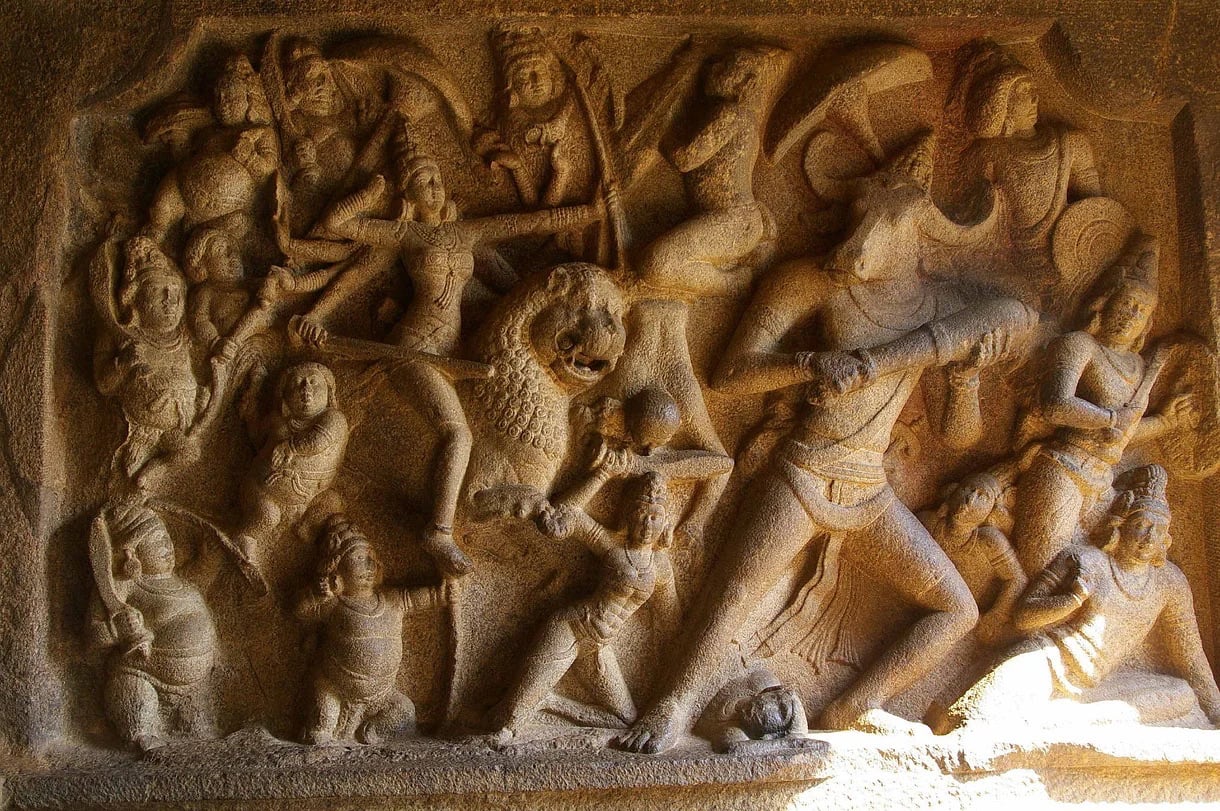
Podi-Kuchi, an essential in Bhartiye Fitness
Podi-Kuchi, an essential in Bhartiye Fitness
Read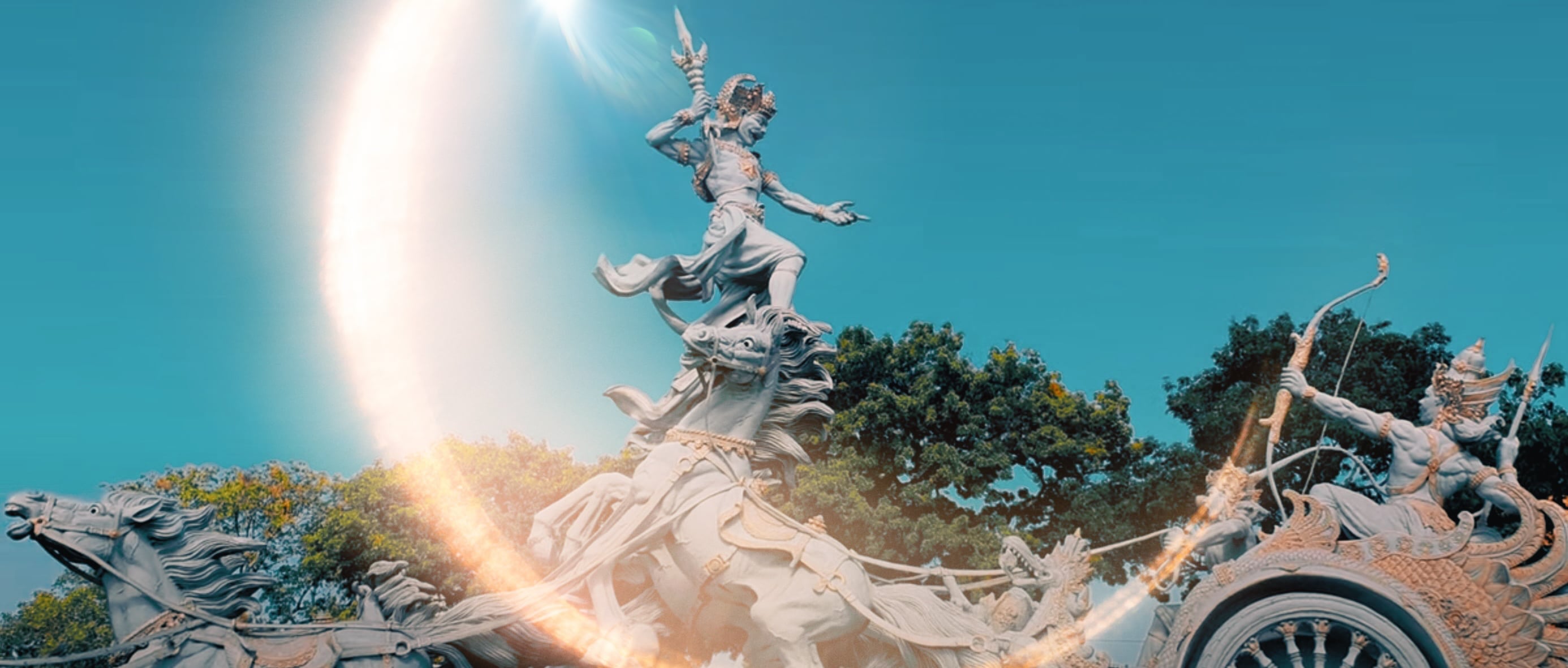
The Famous Five & the Idumban Karlakattai
The Famous Five & the Idumban Karlakattai
ReadComments
Commenting as a guest. Log in to reply, react to comments and keep your name.
No comments yet. Be the first to share your thoughts!
'%3e%3ccircle%20cx='430.943'%20cy='430.943'%20r='156.943'%20fill='white'/%3e%3c/g%3e%3cdefs%3e%3cfilter%20id='filter0_f'%20x='0'%20y='0'%20width='861.886'%20height='861.886'%20filterUnits='userSpaceOnUse'%20color-interpolation-filters='sRGB'%3e%3cfeFlood%20flood-opacity='0'%20result='BackgroundImageFix'/%3e%3cfeBlend%20mode='normal'%20in='SourceGraphic'%20in2='BackgroundImageFix'%20result='shape'/%3e%3cfeGaussianBlur%20stdDeviation='137'%20result='effect1_foregroundBlur'/%3e%3c/filter%3e%3c/defs%3e%3c/svg%3e)
'%3e%3ccircle%20cx='384'%20cy='384.5'%20r='110'%20fill='%232F7AF9'/%3e%3c/g%3e%3cdefs%3e%3cfilter%20id='filter0_f'%20x='-0.000488281'%20y='0.499756'%20width='768'%20height='768'%20filterUnits='userSpaceOnUse'%20color-interpolation-filters='sRGB'%3e%3cfeFlood%20flood-opacity='0'%20result='BackgroundImageFix'/%3e%3cfeBlend%20mode='normal'%20in='SourceGraphic'%20in2='BackgroundImageFix'%20result='shape'/%3e%3cfeGaussianBlur%20stdDeviation='137'%20result='effect1_foregroundBlur'/%3e%3c/filter%3e%3c/defs%3e%3c/svg%3e)
'%20stroke='white'/%3e%3c/svg%3e)
All rights reserved © Karla Kutuhal Akhara by Vagambhrini 2021-2026
UDYAM ID: UDYAM-UK-07-0005613 | MSME Registered under 8541 - Sports Education
'%3e%3c/g%3e%3c/svg%3e)
'%3e%3c/g%3e%3c/svg%3e)

'%3e%3cpath%20id='path7'%20fill='%23282828'%20fill-opacity='1'%20d='M118.9%2013.3c-1.4-5.2-5.5-9.3-10.7-10.7C98.7%200%2060.7%200%2060.7%200s-38%200-47.5%202.5C8.1%203.9%203.9%208.1%202.5%2013.3%200%2022.8%200%2042.5%200%2042.5s0%2019.8%202.5%2029.2C3.9%2076.9%208%2081%2013.2%2082.4%2022.8%2085%2060.7%2085%2060.7%2085s38%200%2047.5-2.5c5.2-1.4%209.3-5.5%2010.7-10.7%202.5-9.5%202.5-29.2%202.5-29.2s.1-19.8-2.5-29.3z'/%3e%3cpath%20id='polygon9'%20fill='%23fff'%20d='M80.2%2042.5%2048.6%2024.3v36.4z'/%3e%3c/g%3e%3c/svg%3e)